Exogenous Ketones!

Monday, March 2, 2015

THE VIKING MANIFESTO Part 7: How Do I Get Started on the LCHF Diet?

THE VIKING MANIFESTO: Piecing Together a New Approach to Nutrition and Training for Swimmers from Scientific and Anecdotal Evidence.
Part 7:  How Do I Get Started on the LCHF Diet?
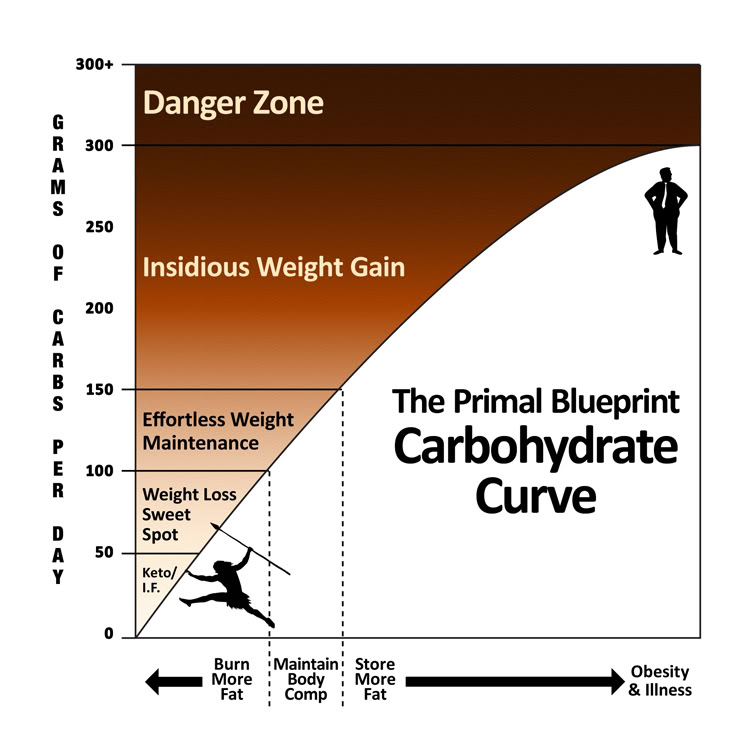

Carb_Curve_color.jpg
Mark’s Daily Apple just helped you lose the extra weight with one drawing.

If you are still following along with the Manifesto at this point, then you must at least be intrigued enough to want to know what the low-carb, high-fat diet would look like in real life.  You may not quite be ready to drop the traditional nutrition info recommended by USA Swimming in articles like this, and presentations like this, but you at least want to know how different this might really be.  I doubt anyone wants to take it as far as I have, which means going almost completely carnivorous, but if you read below you can see that it doesn’t have to be that extreme.    This cat lived to be age 39 on bacon, eggs, broccoli and coffee. It can’t be that hard, right?  


39 year old cat.jpg
Bacon, eggs, broccoli and coffee.  This is key in my plot to break Jaring Timmerman’s records in the 100-104 age group.


The question is, do you have the nuggets to give this a try long enough to adapt and see if the low-carb, high-fat diet is really for you?


If you were to just jump in and try a low-carb high-fat or ketogenic diet, you would most likely feel miserable for a while and your performance in practice and meets would tank.  My contention throughout this multi-part series is that if you stick with it long enough to adapt your performance will recover in every way, and will improve significantly in some of the most important parameters of swimming training.  Add the correct training and this effect can be enhanced even more. So far though, I haven’t really gone into detail about how you would go about making the switch to LCHF in the most safe and efficient way.  I believe that this is optimal for everyone, but I also know that people who don’t have the force of will to be meticulous about it at first may have a bumpy ride.  


My basic advice?


  1. Do not jump into this in the middle of a season.  Use the time between seasons to get started because it is best to give yourself some adaptation time without the stress of a heavy training load.  There will also be a period of time where performance in practice and meets may suffer.  To give yourself the best chance of sticking with it you should use the pre-season to adjust.
  2. Make a doctor’s appointment.  Talk to your doctor about the change you want to make.  If you are nervous about taking nutrition advice from a stranger with an obsession with Norse culture, ask the doc for a full metabolic panel so that you have stats to compare later to know if there are any issues that come up that would cause you to need to adjust what you are doing.  This is not just about cholesterol.  Thyroid stimulating hormone, C-reactive Protein, A1C and other measurements can be included and monitored as well.  You will see some details below on why this might matter, but honestly, I wish I had done this myself just so that I could have shown off my improvements with some real stats.  Be prepared for push-back from the doctor though-- this is not what they were taught in med school so once in a while they might try to talk you out of it just because they don’t know much about it.  I printed stuff to bring to my doctor but she didn’t need to see it.  She was immediately on board and encouraged me to keep it up.
  3. My Fitness Pal and Runkeeper are your new best friends.  It is vital that you track your calorie burning and food intake, at least for the time that you are learning how to manage this diet.  This is not just for calories sake, and not just to monitor your macro-nutrient percentages.  It is also important to track sodium and potassium due to the water-shedding effect of LCHF.  If you want to see what I really eat and how I really train, ask to be my friend within these apps.  These apps are now just a routine part of my day.
  4. DO NOT ATTEMPT TO ADOPT THIS LIFESTYLE WITHOUT THOROUGHLY READING UP ON IT.  Think about it.  You are taking nutrition advice from a stranger on the internet who you know nothing about except that he likes his hats to have horns.  Do your damn research and don’t just take my word for it.  At the bottom of this post will be a list of recommended reading.  Some of it should be considered REQUIRED READING and they will be marked with a **.  Do not skip these!


When someone asks me what it is I did to lose all this weight, I ask them “do you really want to know, or are you just making conversation?”  I don’t want to suck any unsuspecting friends into the rabbit hole with me just because they were being nice.  If they want to know, I send them this brief write-up I have saved on my phone:


Target around .8-1.2 grams of protein per pound of lean body weight.  ( I calculated that by subtracting my % body fat from my actual weight.)  More protein is okay sometimes, but less is not if you are working out. Stay between 0 and 150 grams carbohydrate.  The rest of your calories should come from fats. This is where you get your energy from. On the days you don't work out, stay at the lower end of the carbohydrates. When you are working out consistently and you have reached the weight you want to be at, it probably won’t hurt to have more.   Between ten and thirty percent of calories is plenty even for an ultra-endurance athlete. A ketogenic diet is normally considered to be one that stays below 50 grams of carbohydrate, but in heavy training you can probably be in ketosis without going quite that low.


Recommended foods: fatty meats (too much lean meat is high protein, low fat); olive oil (cold); coconut oil (the only one to cook with besides animal fats like lard); butter; heavy cream instead of milk; nuts, but not peanuts; seafood (get some canned sardines in olive oil, shrimp, etc.); lots of eggs; avocado; green leafy vegetables.


AVOID: partially hydrogenated oils; wheat, beans, rice, potatoes, legumes; sweets; sugary drinks, including sports drinks; anything deep fried and breaded is from the devil.  It is easy to over-do fruit: fructose refuels liver glycogen, which stands in the way of fat adaptation a little. Ideally the carbs you eat should go toward refueling muscle glycogen rather than liver if your goal is to stay in ketosis.  The more fibrous fruits, like berries, are best.


ELECTROLYTES: you will want to drink lots of water because the lower you go on carbs the more it is like a diuretic. This causes you to pee out electrolytes. The recommended supplementation is 5000 mg sodium, 1500 mg potassium, and 300 mg magnesium although sometimes it helps me to go higher. If you get leg cramps at night take another magnesium and/or back off the water a little and see if it helps.  I have even been adding a half-teaspoon of baking soda to my water once in a while and it seems to help with my leg cramps as well.


Basically, keto looks like this:
keto food pyramid.JPG
Yup.  You are flipping the food pyramid upside down.

Once you get used to eating this way, you may not feel hungry as often as you did before.  Part of the reason I started tracking with My Fitness Pal was because I could go so long without eating that I worried I wasn’t eating enough.  I now have to double check to make sure I am getting enough food to maintain my weight.  I am not kidding.  I no longer have the blood-sugar dips, afternoon sleepiness or food cravings that were once a normal part of my day.  Yes, the carb cravings eventually go away.  The hardest part of this diet is social:  you will be amazed at how much carbohydrate is thrown in your face every day, and you will eventually marvel at how much of what others eat is stuff that you no longer even consider to be food.  The guilt trips people lay on you over not eating a cracker can be sheer lunacy.


carbs.GIF
At first it was like this.  Now I walk into the teacher workroom and in my mind, those donuts might as well be bicycle parts.

But, Viking… none of these foods come in a box?!  How am I supposed to do a ketogenic diet around my crazy work schedule?  This was actually the hardest part for me at first.  I thought this diet would be expensive and I assumed I would not be able to do it since I am at the pool for most of my meals.  When I did the math on the two or three fast food combo meals a day I was eating before, I realized pretty quickly that keto could be cheaper… but then I had to prepare my own meals.  How do I manage that?: Simple-- I have a mini-fridge, a microwave and a George Foreman grill.  Easy peasy.  I stop by the grocery store on Monday mornings on the way to work and get my food for the week.  If I have time to stop by the butcher I stock up there as well.  (They sell individual 8 oz club steaks for $3.75!)   I learned to make some really kick ass scrambled eggs in the microwave and the rest is pretty easy.  Plus, anything can be made yummy with either cheese or Frank’s Red Hot all over it.  Am I right?  


1363476233_1_georgeforeman.jpg
DaVinci. Galileo. Edison. Tesla. Foreman.  This grill might be one of the most life-changing inventions in history.


Also, there are a million places online with keto friendly recipes, and many of them are creative ways to have your favorite non-keto meals in a low-carb way with substitutions.  You will see a lot of things like crushed pork rinds used as breading, or pizza crusts and taco shells made of bacon or cheese, which is better than bread anyway.  I mean, really… if you think even the Doritos taco shell beats a bacon taco shell, you got issues.


Can there be dangers associated with going low carb?  Well, yeah, but they can be managed.  Electrolytes are something that need to be taken seriously.  They are vital for heart function, and too much potassium can be even worse than not enough. I supplement daily with magnesium and potassium just to be sure I stay in a good range and I pay attention to MFP to make sure.  I also do not avoid salty foods. Ben Greenfield wrote an excellent article about what he believes are the four dangers of going low-carb, and fortunately he is a guy who not only manages this in his own triathlon training but is also a personal trainer who helps other athletes as well.  In this article, he recommends between 100-200 grams of carbohydrate for those who train with high-volume for a few reasons, which is still very low.  (He trained and rocked an IronMan this way.)  When he did his AMA on reddit I asked him how many carbs are necessary for my particular low-volume training regimen and he said I should be fine with 40-60 grams of carbohydrate which is about where I land naturally.  Of course, there are those out there doing high volume training with carb counts lower than mine, and Dr Attia is one of them, as he tells us in this podcast interview he did with Ben Greenfield. In that interview Dr Attia goes into detail about electrolytes, heavy training, and many other details about mistakes he made in managing the diet and I consider it mandatory listening. Unfortunately, in that interview, Dr Attia also says he wouldn’t recommend ketosis for a pool swimmer, but on that point I disagree with him simply based on my personal experience. (I don’t think he has ever heard of USRPT.)


Paul Jaminet, author of The Perfect Health diet, has also written a series of articles laying out what he thinks can be dangerous, even going so far as to speculate that there might be a “carbohydrate deficiency disease.”  He also claims that there are “nitrogen balance” issues with eating too much protein.  These are worth a read.  I am not trying to scare you away, of course, but I want you to see some points on the other side of the argument, so that if you should run into any problems you might have a resource to seek out changes that can make this diet more beneficial to you.


Are carbs gonna kill me if I eat them every once in a while?  Nah…  Mark’s Daily Apple has an 80% rule, meaning that we are creating good habits and if you change your lifestyle to eat right 80% of the time you are probably doing just fine.  I still enjoy ice cream with my kids once in a while.  I do avoid grains as much as possible, including rice and corn because they make me feel like crap.  Beans also give me stomach issues.  To be honest, most of my carbs are from fibrous green veggies, nuts, dark chocolate and red wine. Plus, Dr Attia claims that after exercise we may be able to eat some carbs without interfering with ketosis at all by calculating the glucose deficit based on workload, which is pretty handy for when you just feel like scarfing down something sweet.  There are also variations of the diet that are outlined in the /r/keto FAQ that incorporate carbs on a schedule so if you are struggling with straight up keto you can look into those to see if they work better for you.  Of course, after adapting for a while you may not feel the need.


IMG_4159.GIF
...sometimes a treat is worth it.


What about cholesterol?  Well, just last week our government announced they will be removing cholesterol rich food avoidance from their guidelines.  Yup, eggs are back.  I recently wrote a post on cholesterol that has some links embedded within it if you are concerned and want to read up, but in the list of resources below I have the ** next to the /r/keto FAQ.  It is required reading and goes into detail about cholesterol and what to watch for when you get that metabolic panel at the doctor’s office.  Essentially, high cholesterol isn’t as great an indicator of heart disease as we have been told.  Here is a nice chart that shows how a typical person changing from the standard American diet to LCHF will fare regarding risk factors for heart disease:
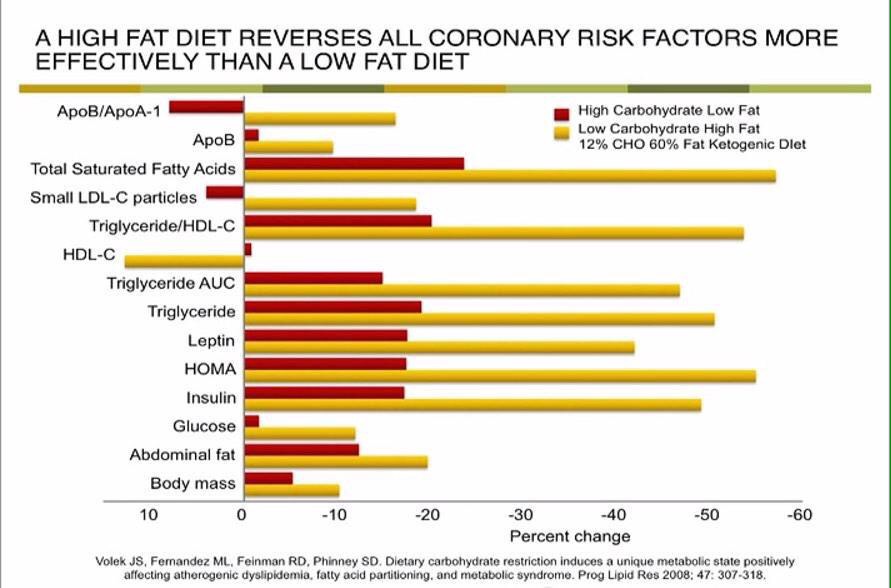

chart.JPG

A typical day of eating for the Viking?  


Breakfast:  six eggs scrambled in the microwave with Kerrygold butter, heavy whipping cream, Morton’s light salt, and occasionally some bacon cooked in the microwave as well.  Lots of coffee.  


Lunch:  Steak.  Usually not over $5 worth.  I don’t avoid the fat and gristle.  The cheap cuts are actually healthier most of the time as the expensive ones are often too lean.  Once a week or so, I add 4 oz of liver, and butter to go with my steak.


Dinner:  Salad made from raw spinach, nuts, olive oil, avocado, and some kind of seafood like sardines, salmon/ tuna from a pouch or shrimp that just need to be thawed with running water.  


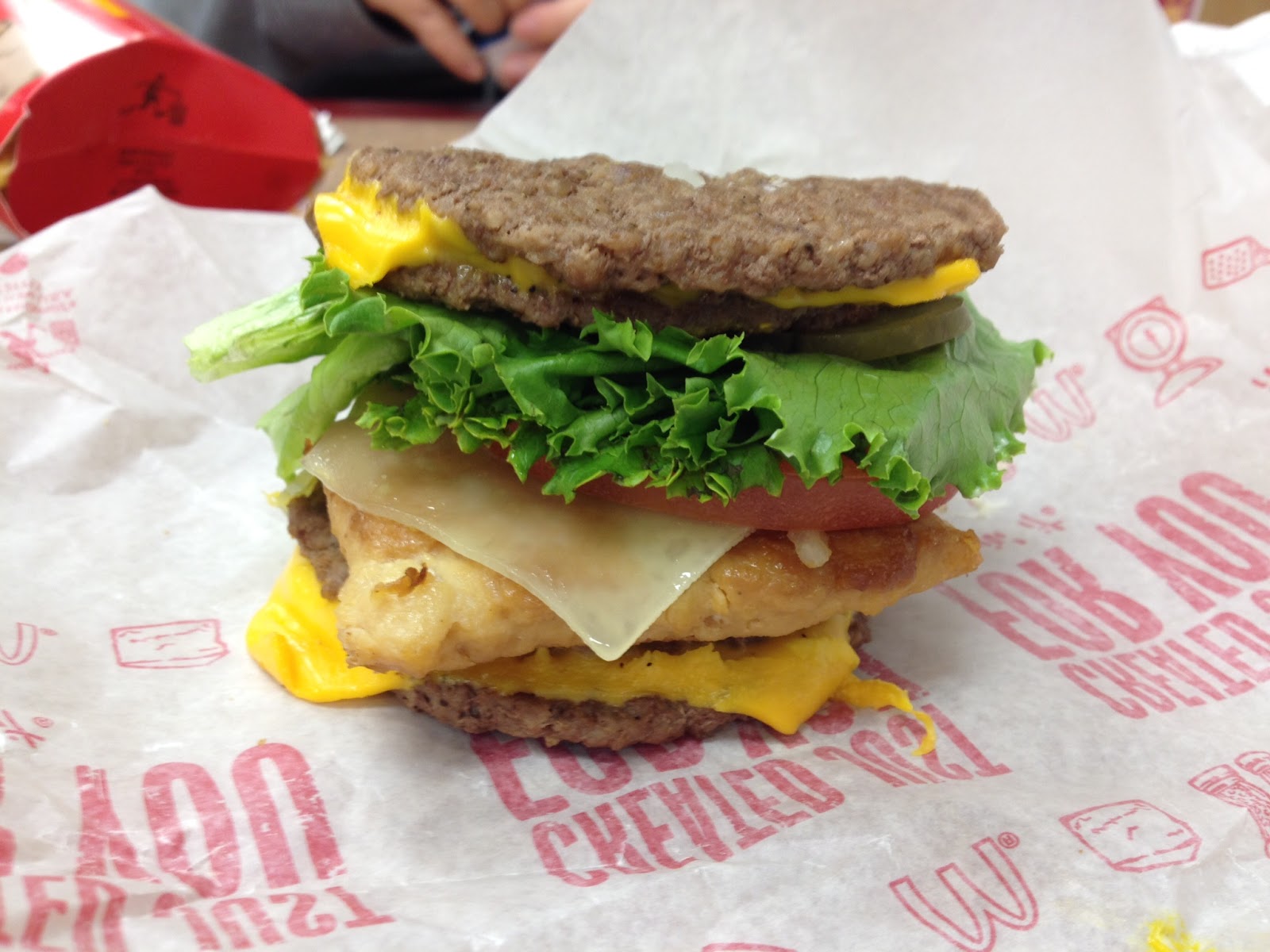
If I am busy and get stuck hitting the drive thru?:  Many burger places just lettuce wrap their burgers and that makes it pretty easy.  Some, like Wendy’s let you order combo’s with side salads and ranch dressing rather than fries. Hardee’s and Wendy’s also put great coupons in the Sunday paper, and Wendy’s also puts coupons on their receipts.  Occasionally I can get two ⅓ pound burgers at Hardee’s for $4, and a triple baconator can be $4 as well if you pay attention to your coupons and deals.  Hardee’s is so keto-friendly that they have a low-carb breakfast bowl, and Sonic will even let you just order bacon and eggs if you sweet talk them. Dollar menu burgers are great too with no bun and no ketchup.  Sometimes I even use the meat from McDoubles as the bun for my grilled chicken club.  

meatatarian delight.JPG
Not kidding.  I invented my own McMeatatarian Delight.  

Also, in my town every BBQ place does all-you-can-eat ribs on Tuesday nights.  They all know me by name.


fetish.GIF
All-You-Can-Eat Ribs.

Snacks to put in your swim bag?  Quest bars are keto-legal even though they list as high-carb, simply because most of the carbs are fiber, leaving only three or four grams of active carbohydrate. (Some people doing this diet subtract the fiber carbs from the rest to come up with “net” carbs.) Quest bars are pretty common in supplement and nutrition shops.   Even better though are KETOBARS.  This is a company that was started by a redditor who saw a need and I love them.  If you order some, leave them a note that the Viking sent you.


I plan to keep writing on this topic, and may post a bit more at SwimSwam, but a lot of additional posts will continue to be made at The Swim Brief, as they will be supplemental and will often be about my own personal second-swimming-career adventure.  I love discussing this stuff so please don’t hesitate to shoot questions my way, and if you see me on deck feel free to grab my attention.  I learn new things every week and I love to share.  I don’t expect everyone out there to have read every detail of the Manifesto, but I hope that a lot of coaches have it saved in their browser to go back and catch up if they haven’t kept up.  I also hope that readers take time to browse some of the many links throughout the articles as there is so much more info out there if you just keep following the science.  As you can see, this stuff is slowly hitting the mainstream so my ideas here may not seem so far-fetched in the near-future.  


I am not the only low-carb swimmer out there, and I have a feeling that soon we will start seeing more and more keto swimmers crawling out of the woodwork.  Until then, I hope to swim fast enough to make more SwimSwammers and SwimBriefers do a double-take and go back to read up on how I am getting the job done.  Wish me luck.


Recommended Reading and Resources:


The Eating Academy, Peter Attia, MD


http://www.reddit.com/r/ketogains **be sure to read their FAQ as well!


http://www.reddit.com/r/keto  **be sure to read the FAQ and Keto in a Nutshell!!  
The search function within all of the keto subreddits can also help you find answers to just about any questions that come up!!

Books:


Wheat Belly by William Davis, MD


Grain Brain by Dr David Perlmutter


The Art and Science of Low Carbohydrate Performance by Jeff Volek and Stephen Phinney

Movies and Videos:  (lots more are listed in the /r/keto FAQ and “nutshell”!)


**and of course, you can always contact me through SwimSwam or the Swim Brief if you would like to learn more.  

APPS:


Keto Diet, Runkeeper and MyFitnessPal:

keto app logo.PNG  runkeepermyfitnesspaljoinhands.jpeg

Friday, February 27, 2015

Ketones, Inflammation, and Some Thoughts on Cholestrol

http://www.sciencedaily.com/releases/2015/02/150216131146.htm

The article linked above is kind of important.  One of the points I make repeatedly in my manifesto is that in regard to the ketogenic diet, we are still in uncharted territory as there are still a lot of questions that need to be answered and there is a lot of important science that still has not been done.  (Even worse, there is a lot of science that has been done that just hasn't hit the mainstream as well though, too.  Check this book out to see a collection of it.)

In a part of the manifesto I spoke briefly on reduced inflammation with the ketogenic diet, I think with regard specifically to more and healthier mitochondria, but I remember I also linked out to the /r/keto subreddit, stating that reduced inflammation is one of the most common side effects brought up by new dieters.  Browse /r/keto for a while and you will see it come up in so many different ways it is astounding.

The ketogenic diet is being studied as a new possibility for the treatment of many diseases, mostly inflammation based, all the way from acne to arthritis, bipolar disorder to Alzheimers, and diabetes to atherosclerosis.  The link above says that Yale University has discovered a direct link between Beta-Hydroxybuterate, one of the prevalent ketone bodies, and inhibition of one of the components of what they call the "inflammasome."  Please take time to read the article at the link above.

This would explain a lot.

We have known for decades that the ketogenic diet is often effective in treating epilepsy.  Heck, even back to biblical times we knew that just not eating could cure a person of "demons."  Nothing brings about high ketone levels like fasting.  Beta-Hydroxybuterate has also been tied to anti-aging, which makes sense when you consider the direct implications for fighting inflammation.

I am curious though, if this might also be at the heart of our scientific disagreements regarding cholesterol numbers and their relevance to heart disease.

My cholesterol went up to above 500 the first time I was tested after starting on the ketogenic diet.  I am not sure what it was before the diet, but I am pretty sure that was an increase as it is incredibly high.  An increase is often reported by people new to keto, but usually it calms down after a while. There are also a few other things I was doing that might have helped it go that high as well.  You see, there is a theory that excess ketones can enter the cholesterol synthesis pathway, which would be the reason that cholesterol goes up in new converts to paleo or keto and then often eventually goes down as our bodies become more efficient at absorbing them and using them for fuel.  This is evidenced by increased ketones in the urine.  Eventually, when fat-adapted for long enough, we don't create excess ketones and we have to use blood monitoring to detect ketones as they won't show in urine samples.

I was running pretty hard at the time.  Ketones tend to test higher after a run.   I apparently had not reached that point yet the first time I was tested.  Also, there is a chance I am just a hyper-responder to saturated fats, which might be genetic.

I had been warned once in a forum on reddit that drinking saturated fats is not a good idea, especially if you are having a sedentary day, as it causes those fats to be quickly processed by the liver.  Add MCT's like coconut oil, and you have a cocktail for high ketones, and possibly high LDL particle count as well.  If you are looking to raise your cholesterol, I have to recommend my routine of fasted running in the morning followed by coffee with butter, heavy cream and coconut oil.  Yikes!

Taking a look at Dr Attia's "Straight Dope on Cholesterol" or Ash Simmonds fantastic summary here, we see that the correlation of cholesterol levels to heart disease is all over the place, with the only significant strong correlation being with particle count when the dust finally settles...

but then here, we have a heart doctor who questions even that.  He claims that even with high particle count after switching to paleo, his heart disease showed a reversal according to scans.  The significance there is that he was looking at actual disease rather than risk factors.  He hypothesizes that maybe the reduced inflammation associated with paleo makes even particle count lose it's correlation with heart disease.

Then we have this interview with Loren Cordain.  In it he states that even the Inuit had signs of atherosclerosis, but that without the inflammation from eating carbohydrate they would most likely not have had heart attacks.  A heart attack requires inflammation to rupture any build-up that might be present.  Dr Kummerow at this link explains it very well, as he fought the system over it for decades.

Of course, it gets even more complicated.

Next we have to look at things like the phenomena of endurance runners having heart attacks due to undetected calcification of arteries when they otherwise seem ultra-healthy.  Mark Sisson at Mark's Daily Apple warns against chronic cardio often.  He insists this is why we should exercise intermittently, keeping our cardio low-intensity and mixing in some form of short burst sprinting. Chronic cardio might be providing even some of us fat-adapted athletes with too much repetitive inflammation. There are so many variables it is hard to keep track.  Would marathon runners not have this issue if they ate a ketogenic diet?  Who knows? Ugh... it is such a puzzle.

So the question still remains that needs to be answered with more science:  "are low carb dieters somehow immune to heart disease in spite of the possibility of higher cholesterol and increased saturated fat intake?"

It seems like a silly question, but it is one that has been asked repeatedly.  With the new finding at Yale, I would think that we need to get NUSI on the job as it might be a much more relevant possibility.  In the paper cited above where it is implied that excess ketones can enter the cholesterol synthesis pathway, he insists that it would be stupid for low-carb dieters to just not worry about their high cholesterol and assume they are somehow specially exempt.  He even suggests adding some carbs back into the diet just to help this level off.  So then we are left wondering: is the high cholesterol more of a risk factor than the inflammation we would get by adding the carbs and reducing the ketones?

I lean toward inflammation being worse than particle count, but I would rather let scientists duke it out as opposed to just going with my gut feeling. I plan to stay low carb and keep eating my saturated fats, but without the bulletproof coffee, without chronic cardio (keeping the running at around three miles if I run at all,) and hanging on to my sprinting with USRPT and short workouts as the majority of my exercise.

and oh yeah... I am going to make a gamble that dark chocolate and red wine will help too, because if eating those every night is wrong, I don't want to be right.

Wednesday, February 25, 2015

THE VIKING MANIFESTO Part 6: USRPT. Duh...

THE VIKING MANIFESTO: Piecing Together a New Approach to Nutrition and Training for Swimmers from Scientific and Anecdotal Evidence.

Part 6: USRPT.  Duh.


Okay guys, it's time to add one more thing to the list of topics to avoid when you are drunk:  the list is now religion, politics, nutrition, your friend's mom, and USRPT.  That’s right SwimSwam commenters, I know which of you loudmouth regulars is playing that game where you take a shot every time Braden mentions Michael Andrew’s name in an article.  If the SwimSwam comments section was a bar, I know which of you guys I would want to party with.


Yup, in case you haven't already pieced it together, the Viking does Ultra-Short Race Pace Training.  What other type of training could I fit in with only 20-30 minutes, two or three times a week to swim?  

to-crush-your-enemies-see-them-driven-before-you-and-to-hear-the-lamentation-of-the-women-1137.jpg
Crush your enemies, see them driven before you, and don’t waste a lot of time training old-school when you could be doing USRPT.


I decided after reading through Dr Rushall’s work that the science made sense and some of his claims seemed to fill in the gaps for me. There was something missing in the translation from training to racing with the way I was running my program.  I was frustrated with the inconsistency and guess work involved in managing the various aspects of coaching so many athletes and I figured that since none of my athletes are world-class there really wasn’t that much risk in making the switch to USRPT to see how it goes. I essentially threw the old EN-SP chart out the window.


luke1.jpg
“Let go, Viking. It’s outdated science.”


I also decided though, that if I am going to do it, I cannot make an informed decision without these two things:
  1. Making sure I do it by the book so I am not still left with questions later.
  2. Getting in the water to try it myself.  Hey, why not?  I had been jogging and had lost some weight, and I had to know what it felt like to truly make an educated analysis.


At the end of last summer I gave a presentation on USRPT to a group of high school coaches to talk about how it worked in our first seasons of training.  I had to admit to all of these coaches that while it was great for my team, it seemed to work better for me over the summer than it did for my athletes even though I trained significantly less than any of them. I usually did one USRPT set for 200 breast one or two nights a week in the LCM pool and one USRPT set for 100 breast pace one or two mornings per week in the SCY pool.  My training was very inconsistent, usually less than 90 minutes per week, and at times throughout the season I was stuck with up to ten days straight with no exercise at all due to my work and family responsibilities. When the dust settled I was confused that I had done so well and showed continuous improvement throughout the whole season, even after being sick for the last two weeks before sectionals. Some people think that USRPT isn’t for younger athletes and might assume that my age somehow made it more ideal for me.  I almost bought into this, even though there really isn’t any logical reason why this might be.  Now that I have spent some time investigating, I am certain I know why:  I started my LCHF journey several months before starting my USRPT journey.  It was not my age that helped me adapt better-- it was my diet.  It is clear as day now.


One of my favorite classes as a PE major was called Perceptual Motor Development.  It had a lot to do with neurology, the brain, and how we learn movements through different developmental stages.  The class was designed so that we coaches can have a better understanding about how to teach students of different ages physical skills in a progression.  When it got really interesting though was when we would talk about neurology and training because several researchers out there, (including Dr Tim Noakes, remember him?) have shown us that the brain is so specific in regard to motor learning that, as those of us who have bought into USRPT like to point out:  “the brain doesn’t even treat slow swimming and fast swimming as the same activity.”  This means that much of the traditional training I did in my first swim career served little more purpose than to increase capillarity to slow twitch muscle fibers.  In my opinion, when we train that way, only the most talented continue to improve and a lot of kids are left to fade away. In Bob Bowman's cup analogy, I guess I just don't buy that we need the Big Gulp. I believe we can throw a better party with shot glasses as long as we fill them with the right stuff. I guess my idea of "capacity vs utilization" is a little different than his.


Now, for most people who have skimmed Dr Rushall’s work, the concept of specificity usually stands out enough to have a little bit of a conversation.  As a matter of fact, John Leonard somehow scrounged together $23k of our USA-S membership dollars to try to prove to us that Dr Rushall hardly knows what specificity is.


up-your-butt.gif
It is time to tell John Leonard  what he can do with that $23 grand.


While I do believe that most of us understand that with the way the brain works, specificity is king in athletics, I feel that many of us neglect it in traditional training.  Dr Rushall claims that technique specificity and mental training are vital throughout his works and are just as important as the actual sets they do.  It’s just that when I hear anyone talk about specificity, it focuses on the neurological, and it almost sounds as though many coaches think we can just not worry about it after we have taught our swimmers proper stroke technique as long as we mix in some sprinting once in a while.  Worse, I hardly ever hear coaches talk about specificity regarding muscle fiber recruitment and adaptation, even among those who use USRPT.  In my opinion, this is just as vital.  This is why LCHF can optimize USRPT, why USRPT can optimize LCHF, and this is also why so many people don’t quite understand why USRPT is truly a brilliant and unique way to train. Lots of people love to talk about Ultra-Short Race Pace Training, but it is very apparent that not many of those people have actually read Dr Rushall's work.  I can't even count how many times I have heard coaches on deck rail against it with gems such as:


"we have been doing that for years.  It's just race pace."


"it's the same as the Sprint Salo book. Why is everybody acting like this is some new thing?"


or the best one--
"It's just lactate tolerance work all the time.  What's the big deal?  Developing kids need aerobic training."


Read it or keep your mouths shut guys.  USRPT is far from any of those things that people assume.  I would recommend USRPT to anyone at any age or any level of competition, especially in conjunction with the LCHF diet.  The following passages from Dr Rushall's work should help tie the two together:


"Some think that USRPT neglects the aerobic system. On the contrary, USRPT exerts nonstop, maximal stress on every oxygen-using source of energy. Its format of short repeats and rests creates a training stimulus that 1) energizes aerobic, slow-twitch muscle fibers beyond the capability of standard aerobic sets; 2) converts a substantial fraction of anaerobic, fast-twitch fibers to the use of oxygen; and 3) binds oxygen to hemoglobin and myoglobin. The overall training effect is to maximize not only base aerobic capacity but also the subsuming “oxidative capacity.” The result is greater speed endurance ― the ability to bring home a race before acid build-up takes its toll...
Ultra-short training produces maximal aerobic adaptation because the aerobic system (Type I fibers) is stimulated continually and maximally and the production of oxidative fast-twitch fibers adds further aerobic function. That contrasts with "aerobic training" or lower-intensity training that, at best, only stimulates maximal aerobic energy production in the Type I fibers. Higher intensity work (race-pace in swimming) is needed to develop maximal aerobic capability (Type I plus Type IIb fiber adaptations). Ultra-short training stimulates maximal energy source production for race- pace techniques. It trains the body to use its alactacid and lactacid energy resources for race-specific tasks better than does traditional (irrelevant) "lactate training".


Traditional training gives us capillarity through distance, and mitochondrial density through intensity, and there is no doubt it can work. This is how Bob Bowman's "capacity/utilization" concept applies to developing athletes.  I am not trying to tell anyone that traditional training won’t work. We see it every day.  I just believe it is inefficient and not optimal, especially with the standard high carb diet.  Now just imagine that you are eating a diet that is shown to make changes within muscle fibers that enhance the ability to work at high intensity without spilling over into anaerobic glycolysis, essentially maximizing your ability to tap fat and oxygen as fuel at high intensities. Then add to it a method of training that converts more fast twitch muscle to be oxidative, meaning a higher percentage of your muscle fibers are programmed to burn oxygen and fat at high intensity rather than relying on the glucose and lactic acid system. Then we basically have an abundance of the right fuel, the right method of fuel injection to make the most of it, and the right engine attached to the car to crank out all that power with less fear of locking up.


Remember these points I made earlier in the manifesto?:


  1. The formula for success in swimming should be technical efficiency and speed at the intensity as close as you can possibly hold to your VO2 max, for the specific distance of your intended race without the negative impact of lactate clearance not keeping up with production.  
  2. If we want to improve supply and utilization both, we should focus on high-intensity swimming done in a way that is designed to cause type 2b muscle fibers to convert to type 2a, and the LCHF diet is the key to unlocking a higher level of potential if we can train for this specific adaptation along with it.  


Essentially, USRPT, when done properly and consistently, is designed to maximize the conversion of fast-twitch muscle fibers to be oxidative, rather than glycolytic. KABLAM!  The ultimate bio-hack.  Fast twitch power optimized to use oxygen and fat as fuel.  LCHF plus USRPT is a lot of capital letters, I know, but I truly believe that this is the optimal way to train swimmers at any age.  Better oxygen utilization, better oxygen supply, and all of this applied specifically to fast twitch muscle fibers, while also warding off the fatigue associated with depending too much on fast twitch glycolytic muscle fibers and anaerobic glycolysis. What better combination could there be to help an athlete go out fast and finish strong in a race?. I believe that this could truly revolutionize our sport.  Add to this all of the general health benefits that we get from leaving the standard high-carb diet behind, and we have a winner.  


LCHF plus USRPT.  This is the Viking Method.


Think about this.  I don't care who you are-- once you start creating more lactate than you can clear in a race your performance is going to suffer.  No amount of "lactate tolerance" training or mental toughness is going to change that to the degree that it should be the focus of high-intensity swim training.  Also, training slow-twitch muscle fibers to optimize a race that lasts less than two minutes doesn’t seem that smart either.  These are flaws in the most basic concepts of swimming training.  We have been shooting arrows at either side of the target, with very few of us lucky ducks ever actually hitting the metabolic bullseye.


Vladimir_Salnikov_1981.jpg
and then there’s Vlad Salnikov…  apparently he could train however he wanted, smoke a couple cigarettes behind the blocks and then get up and sprint a world-class mile. That guy had it all.


Again, most aerobic work done in a traditional swim practice serves to maximize the aerobic potential of slow twitch fibers, and any speed work with enough rest between repeats to recover beyond the optimal time will train fast twitch muscle fibers to be more dependent on anaerobic glycolysis.  USRPT brings about a better training response to fast swimming due to the short repeat distances short rests between repeats allowing for maximal oxidative adaptations and allowing more actual swimming time to be devoted to accurate race-specific swimming.   In USRPT the amount of rest between repeats is probably the biggest factor that sets the reality apart from what people assume about USRPT.  When you also consider that USRPT is self-regulating to avoid neural fatigue as well as the cumulative fatigue that can lead to over-training, it is like the cherry on top of a really huge sciency sundae.  Not that I would eat the cherry… or the sundae.  Just making a point.  This is the best of both worlds in specificity, as it covers the neurological side as well as the metabolic side with pointed specificity regarding muscle fiber recruitment and adaptation.


Doesn't it make sense to focus on recruiting more fast twitch fibers to fire aerobically with fatty acids and/or ketones rather than through glycolysis?  Before reading my manifesto, many people might say no, because glycogen is the “preferred” fuel and fat is the "slow-burning fuel," but, oh yeah, the textbooks were wrong about that. Aren’t the high adaptations shown in the UCONN study enough to convince you that the longer we adapt to the LCHF diet, the more we can take advantage of this metabolic software hack by increasing our ability to oxidize fat as a fuel at increasingly higher intensities? Since it is possible to train our muscles to burn fat and ketones more efficiently through the LCHF lifestyle, it seems to me that there could be a compounding effect when combining it with USRPT.  How fast do I have to swim in my forties to give y’all proof?  I fantasize that a swimsuit company will sponsor me and help me afford to drop one of my stipends and free up a couple of hours to train like the young pups again.  My 15 hour work days just don’t leave much time for training… but I don’t think I need it.  I am gonna keep getting faster just doing what I am doing.  Watch and see.


not me im in my prime.gif
Too old to swim lifetime bests at 40?


The only negatives I have found with USRPT so far are that it can be hard to expect kids to have the mental will to make the most of it day in and day out (hence Dr Rushall’s insistence that mental training is just as important as physical;) organizing a crowded practice can be tough (although my team has gotten pretty damn good at it;) and that one of my swimmers who had been accustomed to high yardage gained about 15 pounds after the switch (which would have never happened with LCHF.  He has dropped some carbs and already lost most of it in a few weeks.)  Anyone who has never tried USRPT probably would not guess how damn hard it can be when an athlete wants to improve.  Last night my workout was a total of 300 warm up and 15x50 breast on 50, holding 32 high’s in the yard pool.  Holy crap it hurt.  By my third fail I was nearly hyper-ventilating.


amy- hurts and dying.GIF


The best parts of it:  the kids on my team get into it and it gives them more accountability.  I love doing it and feel I am wasting so much less time. My role as a coach has changed for the better.  My swimmers can expect to race well all season, yet we have had very few disappointments when they suit up at the big meet at the end of the season.  So far, it has been a win, win, win, win, win for us.  I am happy to give coaches advice for implementing this with their teams, but that is a post for another day.  I made a few mistakes in the transition to becoming a USRPT team, but right now it is a pretty well-oiled machine. My greatest recommendation if you are thinking about giving USRPT a try?: Read every damn word of those Swimming Science Bulletins.

The next chapter in my manifesto is a pretty important one…  “How in the heck do I even get started on a Low-Carb High-Fat Diet?” Yes, I realize I have talked a lot about LCHF without really talking about what I actually eat.  More to come!